Wednesday, June 3rd, 2026
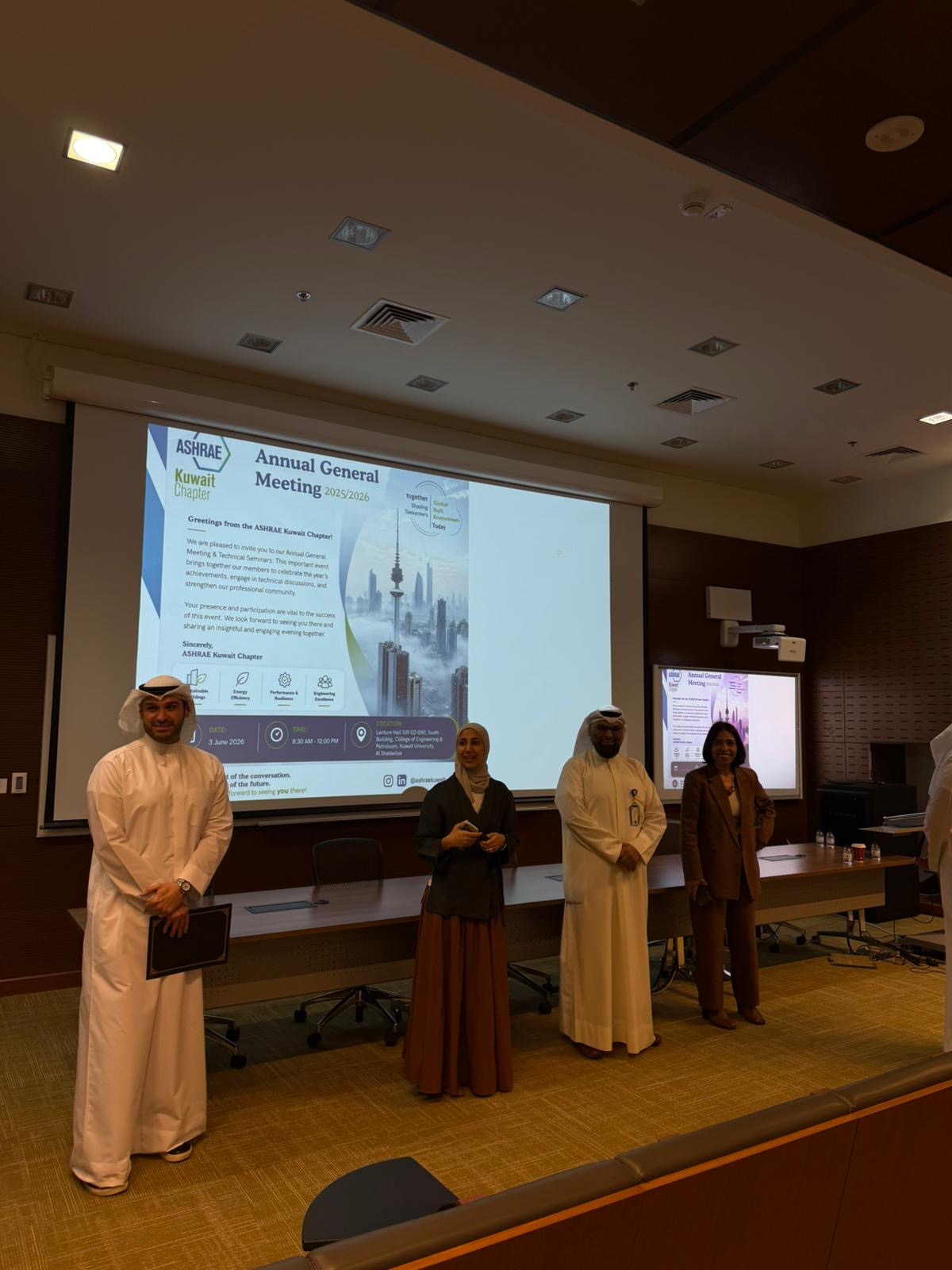
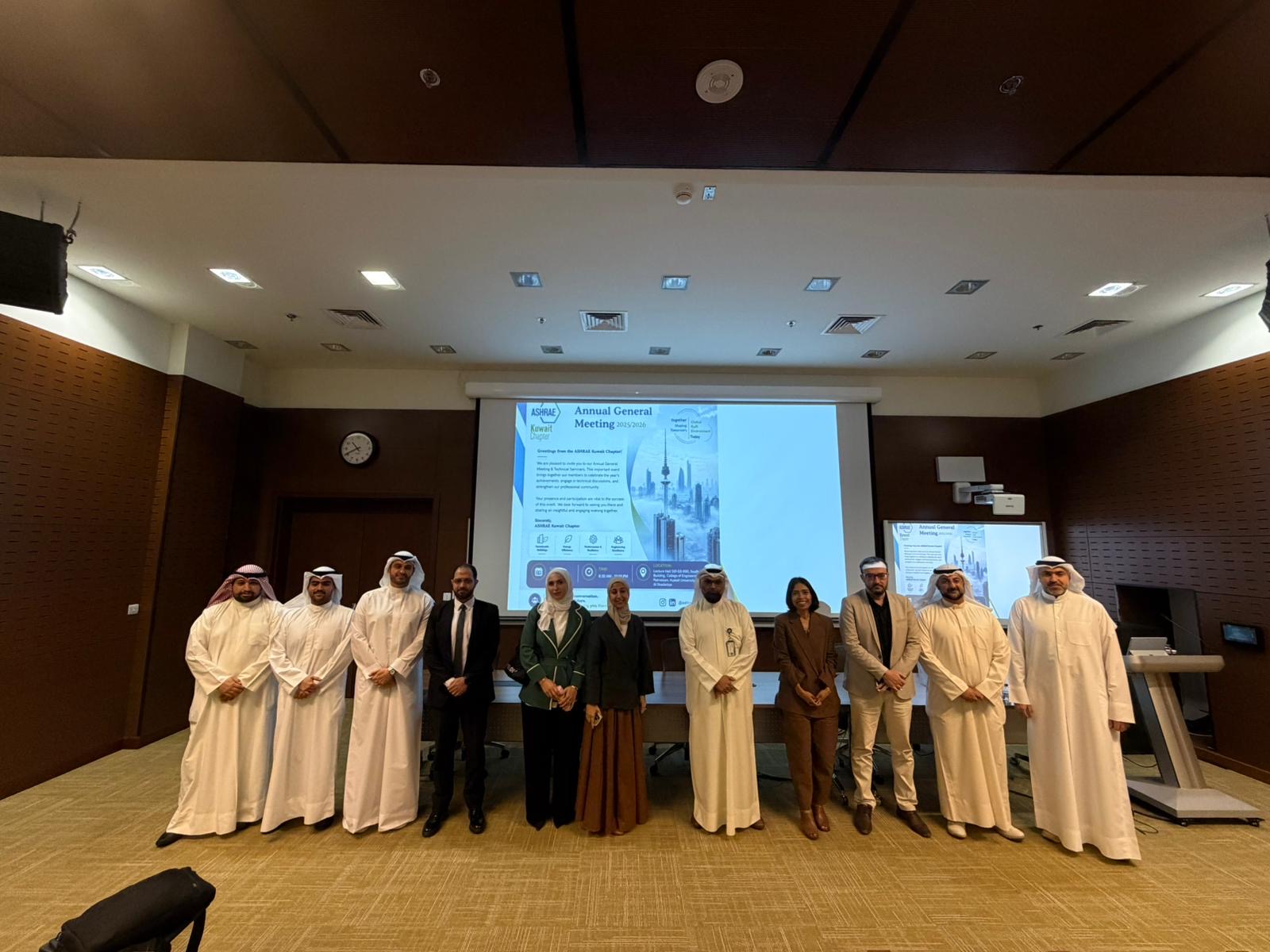
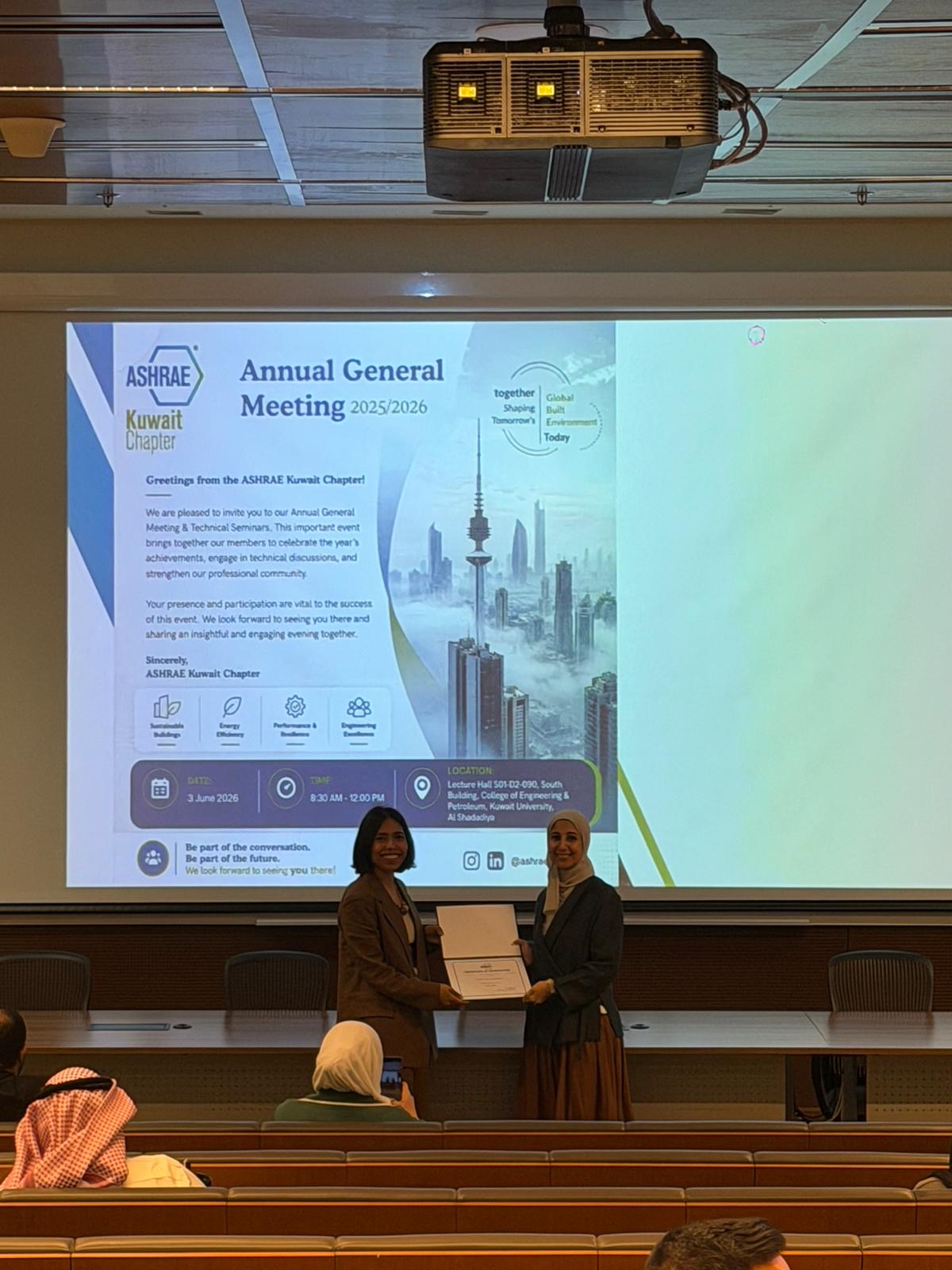
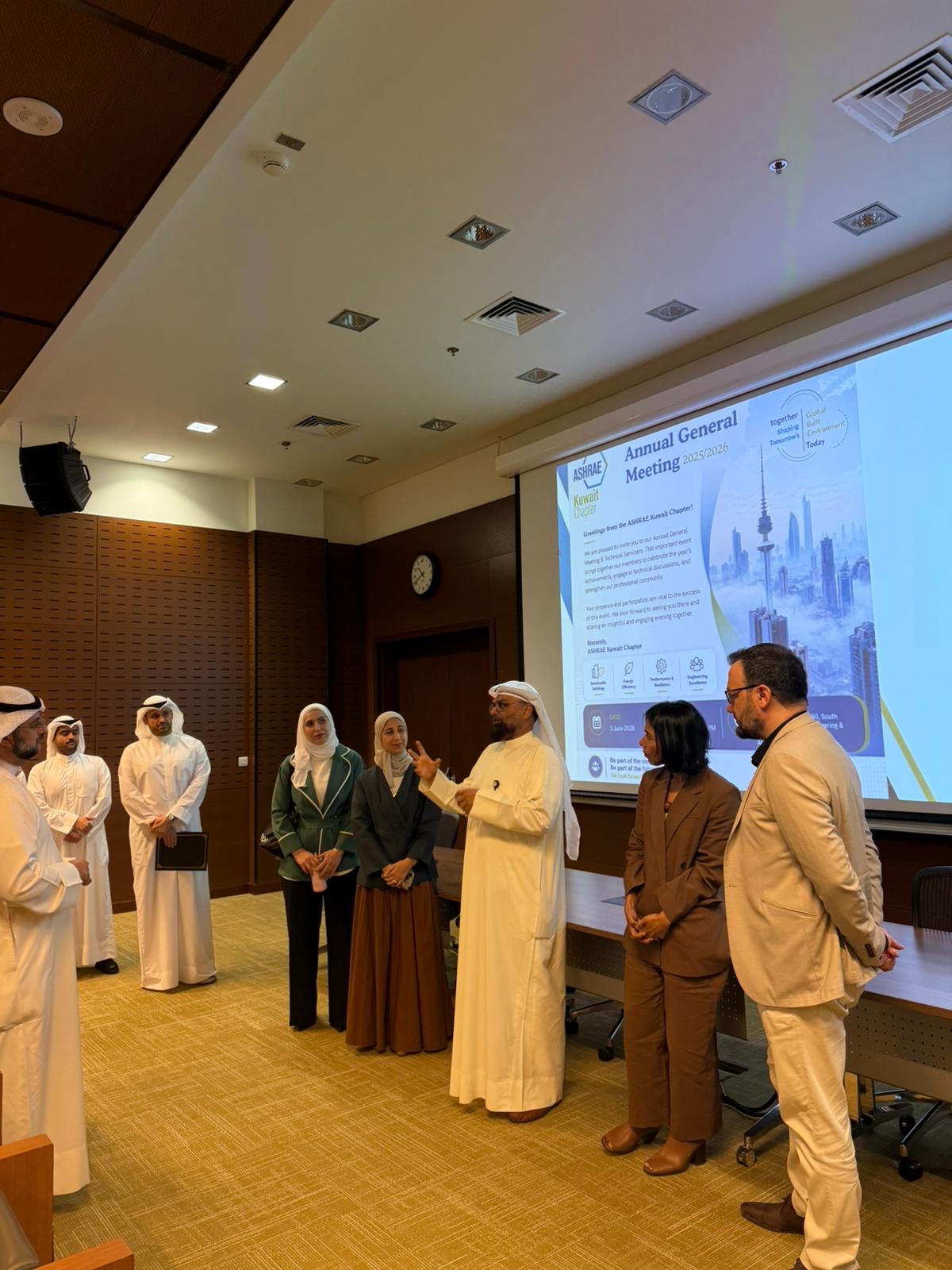
Kuwait Green Building Council (KGBC) participated in the Annual General Meeting of the ASHRAE Kuwait Chapter for 2025/2026, held at Kuwait University's Sabah AlSalem University City. The session brought together engineers, architects, sustainability consultants, and building professionals from across the country for an afternoon centered on one shared question: what does it really take to build sustainably in Kuwait?
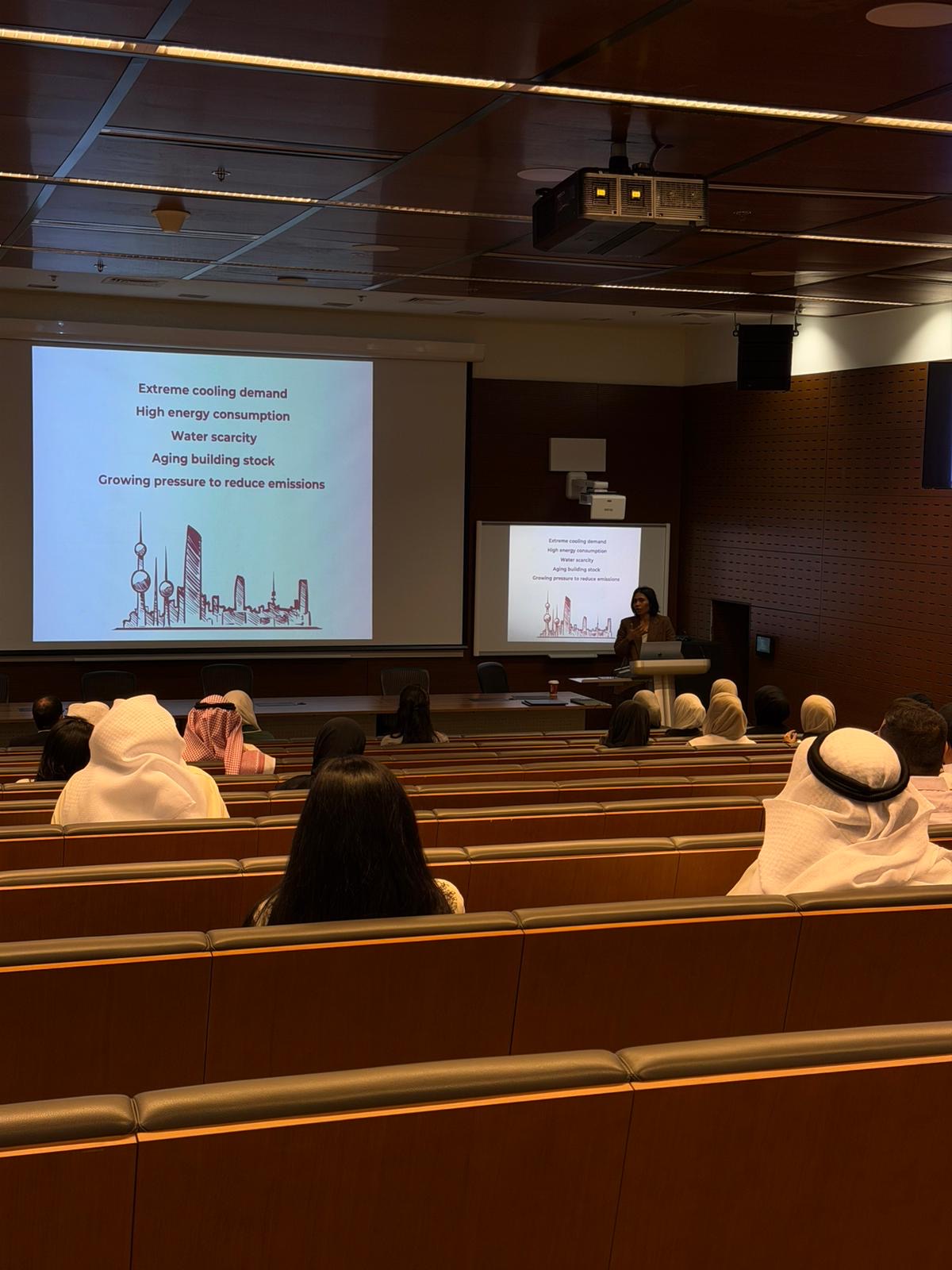
Representing KGBC, General Manager Dalal AlHashash delivered a presentation titled "ASHRAE and the Future of Sustainable Buildings in Kuwait," with the subtitle "From Building Performance to Green Building Leadership." The talk explored how sustainability is measured, certified, and ultimately built — and where ASHRAE fits into that journey.
Setting the Stage: What Does Sustainability Really Mean?
The presentation opened with a broader look at sustainability as a concept, not as a single metric or checklist, but as a layered framework that spans energy use, water efficiency, material selection, indoor environmental quality, and long-term resilience. AlHashash walked attendees through how these layers connect, and why a truly sustainable building can't be reduced to any one of them in isolation.
This framing set up the core message of the talk: that sustainability in the built environment is not a destination, but a continuously measured and improved performance standard, and that performance has to be defined by something concrete.
ASHRAE's Role in Defining Building Performance
This is where ASHRAE enters the picture. The presentation detailed how ASHRAE's standards have long served as the technical backbone for how building performance is actually measured, particularly around HVAC systems, energy use, indoor air quality, and ventilation. These aren't abstract guidelines; they're the codes and benchmarks that engineers rely on daily to design systems that perform as intended, season after season.
AlHashash emphasized that before a building can be called "green," its performance has to be quantifiable, and ASHRAE provides much of the technical language and methodology that makes that quantification possible.
Where Performance Meets Certification
The talk then moved into how building performance standards intersect with formal green building certification systems. While ASHRAE defines and measures performance at a technical level, certification frameworks, such as LEED, translate that performance into a recognized credential that owners, tenants, and the public can understand and trust.
AlHashash explained that this relationship is symbiotic: certification systems frequently reference and rely on ASHRAE standards to validate energy and indoor air quality performance, while ASHRAE's continued evolution is shaped in part by the growing global demand for certified, accountable buildings.
A Local Example: Jaber Mall and the Path to LEED
To bring the discussion home, AlHashash highlighted Jaber Mall as a local case study, a Kuwaiti development currently targeting LEED green building certification, with ASHRAE codes playing a supporting role in its technical design. The example offered attendees a tangible, in-progress illustration of everything discussed up to that point: a real building, in Kuwait, working through the same performance benchmarks and certification pathway covered in the presentation.
Why This Conversation Matters
Events like the ASHRAE Kuwait Chapter AGM are an important reminder that sustainable building practices in Kuwait are advanced by collaboration between technical standards bodies like ASHRAE and certification advocates like KGBC, and between the engineers who build systems and the organizations that help define what "green" means in practice.
KGBC was proud to take part in this year's AGM and to contribute to a growing, cross-disciplinary conversation about what sustainable building leadership looks like in Kuwait. The session was open to professionals across the industry, reflecting a shared interest in moving from performance metrics to genuine, certifiable green building leadership.